Why the World Is Running Out of Living Soil
March 27, 2026
There is a pervasive assumption that the dirt beneath our feet is nothing more than pulverized rock, an inert and lifeless sponge waiting to be filled with chemical fertilizers. In the popular imagination, soil is the ultimate symbol of barrenness. We scrub it from our hands, pave over it with asphalt, and view it as merely the physical stage upon which the real drama of life takes place. Yet, this fundamental misunderstanding masks one of the most astonishing biological realities of our world. A single healthy handful of soil contains more individual living organisms than there are human beings on the planet. Far from being a dead mineral matrix, the ground is arguably the most complex and densely populated ecosystem on Earth, and humanity's failure to recognize this is driving a silent crisis that threatens the future of global agriculture.
To understand the sheer scale of this microscopic universe, one must look at the data gathered by modern soil ecologists. The United Nations Food and Agriculture Organization estimates that soils host roughly a quarter of all global biodiversity. According to comprehensive assessments published in the journal Science, this subterranean web includes billions of bacteria, thousands of species of protozoa, and hundreds of miles of delicate fungal filaments tangled within a single cubic foot of earth. These organisms do not merely exist in the soil; they actively construct it. They process organic matter, extract phosphorus from rocks, and synthesize nutrients into forms that plant roots can absorb. In exchange, plants pump liquid carbon, manufactured through photosynthesis, down into the soil to feed the microbial economy. This ancient, invisible trade network is what allows forests to rise and crops to flourish. However, recent scientific surveys paint a grim picture of this ecosystem's health. Reports from the European Commission's Joint Research Centre have revealed that upwards of seventy percent of agricultural soils in Europe are currently in an unhealthy state, suffering from severe biological depletion. Similar patterns of rapid ecological degradation are accelerating across North America, Asia, and Africa.
The causes behind this catastrophic decline are deeply rooted in the very methods that enabled the twentieth century's agricultural boom. Modern industrial farming treats the soil as an industrial factory floor rather than a living habitat. The relentless practice of deep tilling and plowing turns the earth over, exposing light-sensitive fungal networks and deep-dwelling microbes to the harsh sun, effectively shredding the microscopic infrastructure that holds soil together. Furthermore, the massive application of synthetic nitrogen fertilizers disrupts the natural biological exchanges. When crops are force-fed synthetic nutrients, they stop secreting the carbon exudates that sustain the soil microbiome. As the microbial populations starve and die off, the soil loses its natural sticky secretions, known as glomalin, which bind dirt particles together. Monocropping, the practice of planting vast expanses of a single crop year after year, further diminishes microbial diversity, as the subterranean ecosystem thrives on the varied root exudates provided by a multitude of plant species.
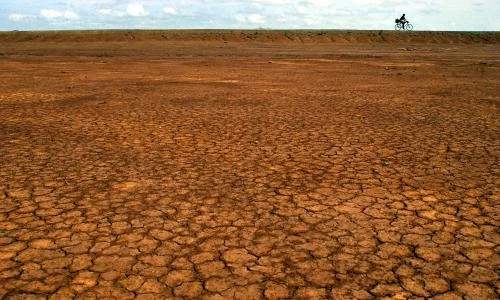
The consequences of killing the living soil are profound and increasingly visible. When dirt loses its biological glue, it loses its structural integrity and transforms into fine dust. It can no longer act as a sponge to absorb rainfall. Instead, water runs off the surface, carrying precious topsoil into rivers and oceans, while leaving the land uniquely vulnerable to both devastating floods and prolonged droughts. The historical precedent for this ecological collapse is stark. During the 1930s, decades of deep plowing across the American Great Plains destroyed the deep-rooted prairie ecosystems that held the earth in place, culminating in the environmental catastrophe known as the Dust Bowl. Millions of acres of topsoil simply blew away, displacing entire communities and collapsing regional economies. Today, the stakes are exponentially higher. The United Nations has warned that if current rates of degradation continue, humanity could lose the majority of its fertile topsoil within the next sixty years. Beyond food security, the death of the soil microbiome accelerates climate change. Healthy soils are the second largest carbon sink on Earth, trailing only the oceans. As microbial life perishes and the soil degrades, centuries of stored carbon are oxidized and released back into the atmosphere, creating a dangerous feedback loop that drives global temperatures higher.
Despite the gravity of this threat, the decline of the soil microbiome is not an irreversible fate. A growing movement of scientists, agronomists, and farmers is advocating for a rapid transition to regenerative agricultural practices that prioritize subterranean health. The fundamental principle is to mimic natural ecosystems by disturbing the soil as little as possible. No-till farming, which leaves the ground intact and plants seeds through the residue of previous crops, protects the delicate fungal networks from mechanical destruction. The integration of cover crops ensures that living roots are always in the ground, providing a continuous food source for the microbial community even during winter months or off-seasons. By replacing monocultures with diverse crop rotations, farmers can cultivate a robust and resilient microbiome capable of fending off diseases and retaining water. There is compelling evidence that these solutions work on a massive scale. In the Indian state of Andhra Pradesh, government-backed natural farming initiatives have successfully mobilized hundreds of thousands of farmers to abandon synthetic chemicals in favor of biological inoculants and continuous ground cover. Within a few years, participants reported revitalized land, increased drought resilience, and crop yields that rivaled or exceeded those achieved through conventional, chemical-intensive methods.
Ultimately, stabilizing the global food supply and mitigating the worst impacts of climate change will require a profound shift in how modern society views the earth. Saving the world does not merely entail looking upward at the accumulating atmospheric gases or outward at the retreating polar ice caps. It demands looking downward, recognizing the unfathomable complexity of the ground beneath our feet. The soil is not an empty vessel for human engineering, but a fragile, living, breathing membrane that sustains all terrestrial life. Treating it with the reverence and scientific care it deserves is no longer a romantic ideal; it is a vital necessity for the survival of human civilization.