Beijing’s Quiet Iran Stance Is Becoming a Political Sell in Europe
April 1, 2026
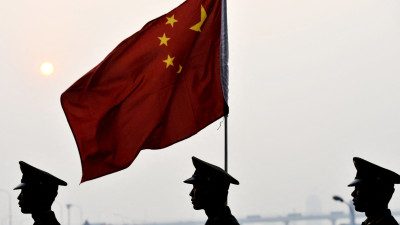
The usual assumption is that a great power proves its strength by taking the loudest position in a crisis. China has chosen almost the opposite path over the U.S.-Iran conflict. Beijing has condemned instability, called for de-escalation, and largely avoided the kind of direct military or diplomatic plunge that would tie it closely to the fighting. That restraint is not passivity. It is politics, and not just foreign politics. China is turning the conflict into a wider argument aimed at parliaments, cabinets, and party leaders across Europe and the Global South: the United States brings risk, while China offers steadier economic ties.
That message arrives at a tense political moment. In many European democracies, governments are already under pressure over inflation, energy security, defense spending, and industrial decline. Public trust in institutions has been shaken by years of crisis, from the pandemic to Russia’s invasion of Ukraine. Now another Middle East shock raises fresh fears about oil prices, shipping routes, and migration pressure. In that climate, Beijing’s officials do not need to persuade entire electorates to abandon Washington. They only need to give political parties, business lobbies, and skeptical ministers a stronger reason to argue for a more balanced line toward China.
The economic backdrop helps explain why this strategy has traction. The European Union and China traded roughly €739 billion in goods in 2023, according to Eurostat, even after years of political strain and efforts to reduce strategic dependence. China remains a major supplier for European industry, consumer markets, and clean technology supply chains. Germany’s car sector still depends heavily on the Chinese market. Southern European ports and logistics hubs continue to feel the long aftereffects of Chinese investment. Across Africa, Latin America, and parts of Asia, Chinese lending and infrastructure building remain deeply woven into national development plans, despite concerns about debt and political leverage.
At the same time, the U.S. security role is becoming more politically expensive in the eyes of some foreign governments. The costs are not only military. They include higher insurance for shipping, threats to energy supply, and pressure on allies to align with sanctions or security positions that may hurt their own economies. After the Red Sea disruptions, global shipping rates jumped sharply, and European importers paid the price. If a wider regional war pushes oil higher for a sustained period, European households and industries will feel it quickly. That is the opening China sees. It can present itself as the major power that did not light the match.
This does not mean Beijing is neutral in any pure sense. China has its own interests in Iranian oil, Gulf shipping lanes, and opposition to U.S. military dominance. It also has reasons to avoid a bigger conflict that could hurt its slowing economy. China’s growth has weakened from the double-digit era of earlier decades. The World Bank and other major institutions have pointed to lower demand, a property slump, and demographic pressure. A prolonged energy shock would be unwelcome. So Beijing’s caution is strategic self-interest. But politically, self-interest can still be packaged as responsibility.
That package matters because European politics is no longer driven by a single consensus on China. The picture is fractured. The European Commission has promoted “de-risking,” especially in sensitive technologies. But member states differ sharply. France speaks more often about strategic autonomy. Germany has tried to harden its security language while preserving trade. Hungary has embraced deeper economic engagement with Beijing. In elections across the continent, both right-wing populists and parts of the left have attacked what they see as blind dependence on U.S. priorities. China’s careful stance gives all these factions material for their own domestic arguments.
The same pattern is visible in the Global South, where governments often resist the idea that every conflict must be viewed through Washington’s lens. Many countries remember the Iraq war, regime-change policies, and sanctions regimes that brought humanitarian pain without stable outcomes. Beijing has worked for years to present itself as the champion of sovereignty and development. It uses state visits, development finance, and multilateral forums such as BRICS to reinforce that identity. During a crisis involving Iran, simply standing back and calling for calm can strengthen that image more effectively than dramatic intervention.
There is a clear political consequence. China’s message may deepen already visible debates inside democratic governments about foreign policy alignment. Should Europe follow the United States more closely on security even when the economic costs are high? Or should it spread risk by keeping stronger links with Beijing despite concerns over human rights, market distortion, and national security? Those are not abstract questions. They shape votes on investment screening, technology controls, port ownership, telecoms policy, and industrial subsidies. They also affect election campaigns, where parties increasingly connect geopolitics to household prices and jobs.
There is also a danger in Beijing’s approach. A country can win short-term political credit for appearing calm while still benefiting from instability it did not stop. China’s record does not support the idea that it is a disinterested guarantor of peace. Its posture toward Taiwan, its militarization in the South China Sea, and its use of trade coercion against countries such as Australia and Lithuania have alarmed many governments. European officials know this. The challenge is that voters often judge foreign alignments less by strategic theory than by visible outcomes. If U.S. power is associated with one more expensive war, and China is associated with factories, electric vehicles, and infrastructure, the politics can shift even when the deeper reality is more complicated.
That is why European governments need a clearer response than simply repeating loyalty to the transatlantic alliance. They need to explain costs honestly and reduce vulnerabilities that make each external crisis politically explosive. That means faster energy diversification, stronger domestic industry, more resilient supply chains, and a more serious foreign policy debate with voters. It also means dealing with China on the basis of evidence rather than slogans. Europe cannot afford either romanticism about Beijing or total denial of economic interdependence.
The United States has its own lesson to absorb. Military power can still deter, but repeated turmoil weakens political trust among allies. If Washington wants to remain the preferred partner, it must show that its leadership lowers risk rather than spreads it. That case cannot rest on history alone. It must be made in present-day economics and public life.
China’s real gain from the U.S.-Iran conflict may not be on the battlefield or at the negotiating table. It may be in committee rooms, cabinet meetings, and election campaigns far from the Gulf. By doing less in public, Beijing is trying to say more politically. The danger for Europe is not that this message is entirely false. It is that, in a weary age, it may sound just true enough.