The Dollar’s Grip Is Weaker Than Before but Still Hard to Break
April 1, 2026
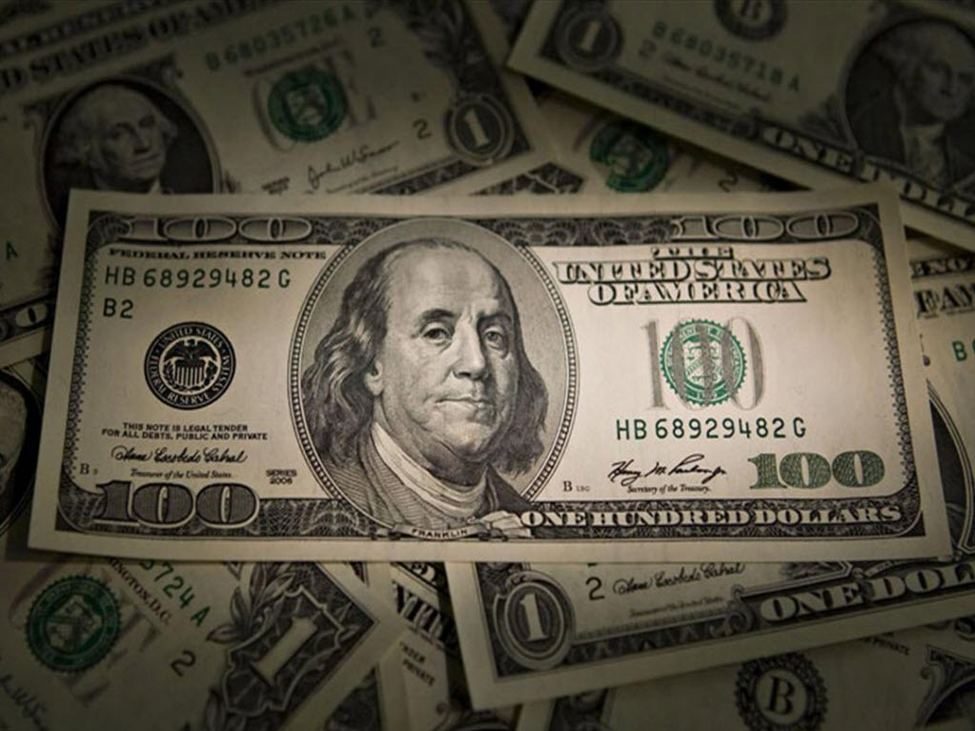
It is easy to think the US dollar is living on borrowed time. Sanctions on Russia, rising rivalry between Washington and Beijing, and louder talk of “de-dollarization” have all helped spread the idea that the world is close to moving on. Yet the evidence points to a more stubborn reality. The dollar’s dominance has softened at the edges, but in the near future it still looks far more likely to endure than to collapse.
The reason is simple. A world currency is not chosen by speeches or summit slogans. It survives because businesses trust it, banks can fund in it, investors can park money in it, and governments know they can find buyers for debt tied to it. On each of those tests, the dollar still holds a lead that no rival has yet matched.
The numbers remain striking. According to the International Monetary Fund, the share of global foreign exchange reserves held in dollars has fallen over the past two decades, from above 70 percent around 2000 to below 60 percent in recent years. That decline is real. But it can also be misleading if treated as proof of a coming collapse. Even after that slide, the dollar remains by far the largest reserve currency in the world. The euro is a distant second. China’s renminbi, despite years of official effort to expand its role, still makes up only a small share of global reserves.
The dollar’s role in actual market use is even more powerful. Data from the Bank for International Settlements has repeatedly shown that the dollar is involved in the vast majority of global foreign exchange transactions. SWIFT payment data also shows the dollar remains one of the main currencies used in international payments. In commodity markets, from oil to metals to grain, prices are still often set in dollars. That matters because pricing habits become self-reinforcing. Once firms borrow, invoice, and hedge in one currency, changing systems becomes expensive and risky.
This is where many predictions of a rapid shift go wrong. They assume a reserve currency can be replaced like a consumer product. In reality, the dollar sits inside a whole operating system. The United States offers the world the deepest pool of safe and liquid government debt. The US Treasury market is vast, active, and easy to trade at nearly any hour. For central banks, pension funds, insurers, and multinational firms, that depth matters as much as politics. In moments of stress, they need assets they can sell quickly without crashing the price. There are few alternatives on the same scale.
Recent crises have reinforced this point rather than weakened it. During the global financial crisis in 2008, investors rushed into dollars and US Treasuries even though the crisis began inside the US financial system. The same thing happened in the early phase of the Covid-19 shock in 2020. As global trade froze and funding markets tightened, demand for dollars surged. The Federal Reserve reopened and expanded swap lines with major central banks to ease global dollar shortages. That was a reminder that the dollar is not just a national currency. It is also the world’s emergency funding tool.
China is often presented as the most likely challenger. It is the world’s second-largest economy and the top trading partner for many countries. Beijing has worked to expand renminbi settlement, signed currency swap agreements, and promoted payment systems outside the US orbit. Some of this has had effect. Russia and China, for example, have shifted more bilateral trade away from the dollar. More oil deals are now discussed in non-dollar terms than a decade ago. But these changes are still limited when measured against the full scale of global finance.
The main barrier is trust, not size. A true world currency needs open capital markets, predictable rules, strong legal institutions, and confidence that money can move in and out freely. China still keeps capital controls. Its financial system remains heavily shaped by state direction. Investors know policy can shift quickly. That does not mean the renminbi cannot grow in influence. It likely will. But growth in trade use is not the same as becoming the main store of value in world finance.
The euro, meanwhile, has long had the economic weight to matter but not the political unity to fully rival the dollar. The eurozone has a large economy and a credible central bank. Yet its bond market remains fragmented across many member states. The sovereign debt crisis a decade ago exposed a basic weakness. Investors learned that the euro had monetary union without full fiscal union. That has improved at the margins, especially after joint borrowing steps during the pandemic, but not enough to displace the dollar soon.
For ordinary citizens, this debate can seem distant. It is not. The dollar’s global role shapes borrowing costs, trade prices, sanctions power, and the impact of US interest rate decisions abroad. When the Federal Reserve raises rates, countries with large dollar debts often feel immediate pain. In places from Argentina to parts of Africa and Asia, a strong dollar can make imports costlier and repayment harder. That is one reason many governments want alternatives. Dependence on the dollar exposes them to shocks they do not control.
Still, wanting an alternative and building one are very different things. The world may be moving toward a somewhat more mixed currency system, with more regional trade settled in local currencies and a gradual rise in non-dollar reserves. IMF research has noted this “fragmentation at the margins,” where some central banks diversify into currencies such as the Canadian dollar, Australian dollar, or South Korean won. But that is not the same as a clean handover from dollar to rival. It looks more like slow diversification around a still-dominant center.
If countries truly want a less dollar-heavy system, they will need more than rhetoric. Europe would need deeper fiscal integration and a larger common safe asset. China would need to accept more open capital flows and stronger legal transparency. Emerging economies would need more stable institutions and more credible local bond markets. Payment systems can help at the edges, but they cannot replace the hard foundations of trust and market depth.
The biggest risk to the dollar may not come from Beijing or Brussels. It may come from Washington itself. Repeated debt ceiling standoffs, threats to institutional independence, or a long-term loss of confidence in US governance could chip away at the advantages the dollar now enjoys. Reserve status is powerful, but it is not guaranteed forever. History shows that dominant currencies eventually fade when the institutions behind them weaken.
That is the real lesson. The dollar will likely survive as the world’s main currency in the near future not because it is perfect, but because every alternative still has larger flaws. Its share may decline. Its power may face more pushback. More trade may move outside its orbit. But unless another economy can offer the same combination of scale, safety, openness, and trust, the dollar will remain the currency many countries complain about, depend on, and return to when the world turns uncertain.