Europe’s Mosques Are Planning for 2050 by Looking Beyond Prayer
April 1, 2026
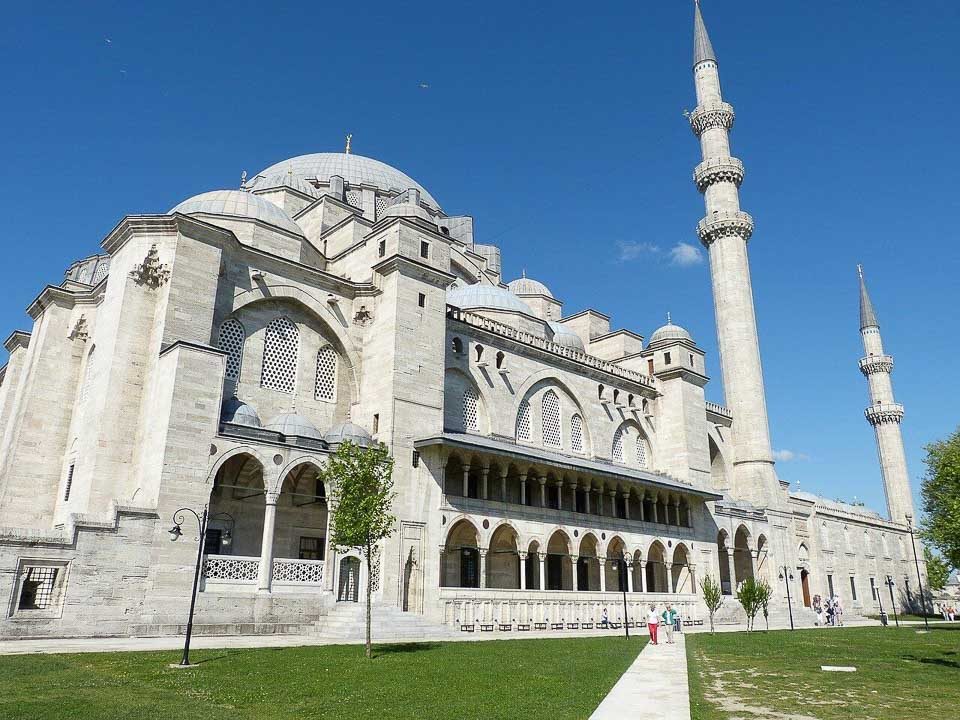
A common assumption about Islam in Europe in 2050 starts with borders, birthrates, and political fear. It imagines the future as a simple demographic contest. But the more telling change may be quieter and far more local. In many European cities, the central question is no longer whether Islam will remain part of the continent. It is what kind of religious institutions European Muslims are building for the next generation, and whether those institutions will be rooted in prayer alone or in a wider social role.
The numbers already show why this matters. Research by the Pew Research Center estimated in 2017 that Muslims made up about 4.9 percent of Europe’s population in 2016, and that the share could rise significantly by 2050 under different migration scenarios. Even under a zero-migration scenario, Pew projected growth because Europe’s Muslim population is younger on average than the non-Muslim population. Yet those same figures are often read too narrowly. They tell us that Islam in Europe is likely to remain visible. They do not tell us what shape that religious life will take, or whether Muslim institutions will be stable, trusted, and deeply European.
That institutional question is becoming harder to ignore. Across France, Germany, the Netherlands, Belgium, and Scandinavia, many mosques that began as informal spaces for first-generation workers now face a second and third generation with very different expectations. In earlier decades, a converted warehouse or storefront could serve a basic need. It offered prayer, familiar language, and a link to home. Today, younger Muslims often want something else as well: sermons in the language they grew up speaking, religious teaching that answers questions about dating, work, mental health, social media, and citizenship, and leadership that understands the legal and cultural setting of Europe rather than treating it as a temporary stop.
Evidence of that shift appears in country after country. In Germany, official efforts to train Muslim theologians at public universities have expanded over the past decade, with centers in cities including Münster, Osnabrück, Tübingen, Frankfurt, and Erlangen-Nuremberg. The goal has been both academic and practical: to create more homegrown religious scholarship and reduce dependence on clergy trained entirely abroad. In Austria, a 2015 law sought to restructure relations between the state and Muslim organizations, including limits on foreign funding for ordinary religious activities. In France, debate over the training of imams has intensified as the government has tried, with mixed results, to encourage a form of Islam less tied to overseas states and more shaped by French civic life.
These efforts are often described in the language of security or integration. That is part of the story, but not the whole of it. The deeper issue is religious continuity. Faith traditions survive in new settings when they build institutions that speak to the next generation in a voice that feels both authentic and local. Christianity in Europe learned this lesson over centuries as churches adapted to national languages, urban life, labor politics, and mass education. Islam in Europe is now going through a similar institutional test at much greater speed, and under more suspicion.
That pressure is visible inside mosques themselves. Many communities are trying to move beyond the model of a single prayer hall run by aging male volunteers. In Britain, some larger mosques have developed youth programs, marriage counseling, women’s classes, food banks, and school partnerships. In the Netherlands and Belgium, Muslim organizations have wrestled with whether Friday sermons should be delivered in Dutch or French rather than Turkish or Arabic. In Scandinavia, where many congregations include refugees alongside long-settled families, leaders often face the challenge of serving people with very different religious backgrounds and educational levels under one roof.
Women and young people are at the center of this transition. Surveys across Europe have repeatedly shown that younger believers, including Muslims, often approach religion through identity, ethics, and community as much as formal doctrine. That can create tension with older generations, but it can also renew institutions. In some European mosques, women now push for more visible decision-making roles, more space, and more programming shaped around family realities rather than inherited custom. If these voices remain marginal, many younger Muslims may drift toward private faith, online religious guidance, or no organized practice at all. If they are taken seriously, the mosque of 2050 could look less like a preserved village import and more like a mature European religious institution.
The stakes are larger than internal community management. Where Muslim institutions remain weak, fragmented, or mistrusted, public life grows harsher for everyone. Local disputes over mosque construction, prayer calls, halal meals, burial grounds, or religious dress can become stand-ins for broader anxieties about national identity. We have seen this pattern for years. Switzerland voted in 2009 to ban new minarets. France has repeatedly turned debates over secularism into debates over visible Islam. In several countries, far-right parties have used mosque politics to mobilize voters well beyond neighborhoods where Muslims actually live.
Yet there is another side to the story, and it often gets less attention. When Muslim institutions are established, transparent, and civically engaged, they tend to reduce friction rather than increase it. Local governments know whom to speak to. Schools and hospitals have partners who can explain religious needs in practical terms. Interfaith work becomes easier. Families feel less pressure to choose between religious loyalty and national belonging. In cities from Rotterdam to London, examples of routine cooperation already exist, even if they rarely make dramatic headlines.
The challenge, then, is not simply to predict how many Muslims Europe will have in 2050. It is to ask whether European states and Muslim communities alike are willing to invest in religious infrastructure that matches reality. That means better imam training in European languages, clearer financial governance, room for women’s leadership, youth programming, and legal recognition that treats Islam less as a permanent exception and more as a normal part of the religious landscape. It also means resisting the temptation to make every discussion of Islam answer to counterterrorism first. Security matters, but faith communities cannot thrive if they are seen only through that lens.
Muslim organizations also face their own hard choices. Imported internal rivalries, ethnic gatekeeping, and opaque leadership structures can weaken trust from within. A mosque that serves only one language group in a mixed city may remain alive for a while, but it may not survive the grandchildren of its founders. The communities most likely to endure by 2050 are those that treat religious tradition as something to be translated, taught, and lived in Europe, not merely preserved from afar.
That is why the future of Islam in Europe will be decided less by headlines about migration and more by ordinary choices made in classrooms, prayer halls, and municipal offices. The continent is not waiting to discover whether Islam belongs to its future. In practice, that question has already been answered. The real test now is whether Europe’s Muslim institutions can become as settled, legible, and locally rooted as the society around them. If they do, 2050 may look less like a clash of civilizations than a slow, unfinished, but very real chapter in Europe’s religious history.