The Most Devastating Water Crisis in the World Is Completely Invisible
March 27, 2026
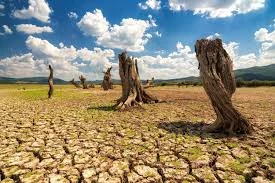
When people picture global water scarcity, the image that most often comes to mind is a cracked, sun-baked lakebed or a shrinking river winding through a parched landscape. The prevailing assumption is that our water crisis is a surface-level phenomenon driven entirely by changing weather patterns and a severe lack of rain. However, this visible drought masks a far more profound and dangerous reality. The most severe water crisis of our time is completely invisible, unfolding hundreds of feet beneath the soil. Groundwater, the ancient subterranean reservoir that quietly sustains global agriculture and provides drinking water to billions of people, is being mined into exhaustion. We are draining our hidden planetary reserves at a pace that nature simply cannot match, treating a finite geological inheritance as if it were an endless, renewable resource.
The sheer scale of this invisible depletion was brought into sharp relief by the NASA Gravity Recovery and Climate Experiment. Between 2003 and 2013, twin satellites mapped the Earth's gravitational pull, revealing that twenty-one of the world's thirty-seven largest aquifers had passed their sustainability tipping points. The data demonstrated that significantly more water was being pumped out of these underground basins than was being naturally replenished by rain and snowmelt. In the Indo-Gangetic basin, which spans northwestern India and eastern Pakistan, groundwater depletion has been so extreme that the massive loss of subterranean water mass can literally be detected from space. Similarly, the High Plains Aquifer in the United States, a massive underground sea that makes commercial farming possible across the American Midwest, has seen water levels plummet by over a hundred feet in some areas since large-scale irrigation began. These are not isolated local issues, but rather symptoms of a synchronized global drawdown that threatens the foundation of the world's food supply.
To understand why this catastrophic drain is occurring, one must look at the machinery of modern agriculture and the economic structures that support it. The mid-twentieth century brought agricultural innovations that saved millions from starvation, but this exponential increase in crop yield relied heavily on the unmetered, unchecked pumping of groundwater. Today, agricultural irrigation accounts for roughly seventy percent of all freshwater withdrawals globally. In semi-arid regions, farmers are routinely forced to pump fossil water—water that has been trapped in deep aquifers for tens of thousands of years—to grow thirsty, water-intensive crops like rice, cotton, and alfalfa. This dynamic is deeply entrenched by regional economic policies. In various agricultural heartlands, from parts of South Asia to the Middle East, electricity for water pumps is heavily subsidized or even provided for free by local governments. Without financial disincentives, farmers have little reason to monitor or reduce their extraction. The economic architecture of global farming actively rewards the rapid depletion of underground aquifers, treating water as a free input rather than a precious, exhaustible asset.
The consequences of this relentless pumping extend far beyond the threat of future thirst, manifesting in immediate and devastating physical transformations of the Earth's surface. As water is sucked from the spaces between underground rocks and sediment, the land above physically collapses. This phenomenon, known as land subsidence, is causing the Indonesian capital of Jakarta to sink so rapidly into the sea that the government is actively relocating its administrative center to another island entirely. In the Central Valley of California, certain agricultural areas have sunk by nearly thirty feet over the past century, permanently destroying the storage capacity of the native aquifers and causing severe, costly damage to surface roads, canals, and bridges. Beyond the sinking earth, the quality of the remaining water severely degrades as supplies shrink. Coastal regions globally face saltwater intrusion, where the ocean breaches the underground vacuum left by depleted freshwater, poisoning the soil and rendering it forever useless for farming. For smallholder farmers whose shallow wells run dry, the crisis is intensely personal. Unable to afford the deep drilling equipment utilized by corporate agribusinesses, families are frequently forced to abandon their land, driving a silent wave of climate migration that destabilizes rural economies and accelerates urban overcrowding.
Halting this invisible crisis requires an urgent global shift from extraction to active stewardship. The most effective interventions recognize that depleted aquifers can be intentionally healed if the right policies are put in place. Hydrologists are increasingly championing a strategy known as managed aquifer recharge, a process that captures seasonal floodwaters and directs them into designated sinking basins, allowing the water to slowly percolate down and refill subterranean reservoirs. In places like the Pajaro Valley in California, local agricultural cooperatives have successfully implemented meter-based pricing for groundwater alongside active recharge projects, stabilizing regional water levels without destroying the local farming economy. Furthermore, agricultural policies must firmly incentivize crop shifting. Growing water-intensive crops in arid environments is an unsustainable luxury the world can no longer afford. Governments can provide financial backing and safety nets for farmers transitioning to drought-resistant crops that thrive on natural rainfall rather than deep-well irrigation. Removing blanket subsidies for agricultural pumping and replacing them with smart metering ensures that groundwater usage is transparent, accurately accounted for, and priced to reflect its true scarcity.
The water hidden beneath our feet is the ultimate safety net for human civilization, acting as a quiet buffer against the unpredictable extremes of a warming climate. For generations, modern society has operated under the dangerous illusion that out of sight means infinite in supply. Erasing this misconception is the first critical step toward averting a global humanitarian catastrophe. If we continue to bankrupt our aquifers, no amount of advanced agricultural technology will be able to squeeze life from dry rock. We must begin to treat groundwater with the same reverence, strict management, and protective legislation that we apply to our most vital strategic national reserves. Preserving the invisible foundation of our world is no longer just an environmental ideal; it is an absolute necessity for our survival. By reshaping how we value, price, and replenish this hidden resource, we can ensure that the wells of the future never run dry.